
Real Strategies That Actually Work (Even When You're Starting From Zero)
How to Market Your Online Marketplace
Marketing an online marketplace is fundamentally different from marketing a normal product or SaaS. You're not selling one thing - you're building momentum between two sides. This page breaks down the real, practical strategies for marketing a marketplace.
You've built your online marketplace. The platform works. The features are there. But now you're stuck on the hardest part: How do you actually get users?
(Haven't built yet? Start with the full step-by-step playbook on how to start an online marketplace first - this guide assumes you have a live marketplace that needs users.)
Marketing an online marketplace is fundamentally different from marketing a normal product or SaaS. You're not selling one thing - you're building momentum between two sides. And if you approach marketing the wrong way, even a great marketplace will fail.
This page breaks down the real, practical strategies for marketing a marketplace - without hype, shortcuts, or generic advice.
Why Marketplace Marketing Is Different
Most marketing advice assumes you have one customer, you can run ads immediately, and demand already exists. Marketplaces don't work like that.
You're dealing with:
- Supply and demand - two distinct audiences
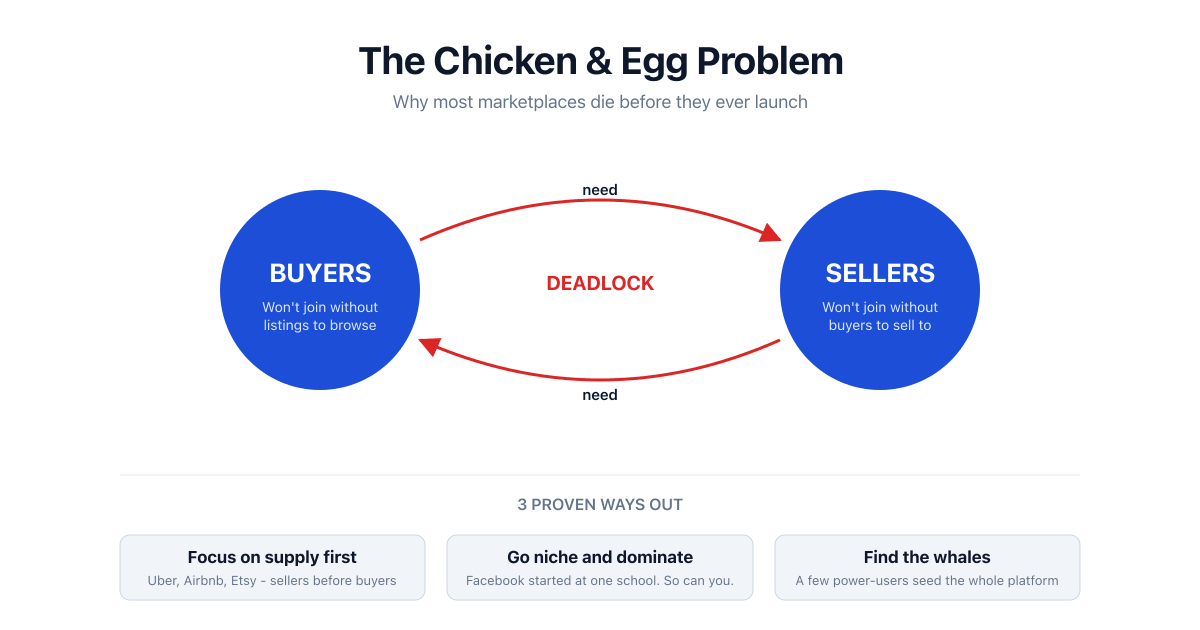
- A chicken-and-egg problem
- Zero trust at the beginning
- An empty platform that needs activity to feel valuable
That's why generic marketing tactics don't work for marketplaces - and why most founders get stuck after launch.
The First Critical Decision: Supply or Demand?
Before you do SEO, ads, content, or partnerships, you must answer one question: Which side of the marketplace do you focus on first?
In roughly 95% of marketplaces, the correct answer is supply first.
Why? Because buyers don't come for platforms - they come for inventory. Focusing on sellers first gives you:
- Listings and content
- Social proof
- SEO pages
- A reason for buyers to care
There are exceptions - such as job marketplaces or request-driven platforms - where demand pulls supply. But if you're unsure which side to start with, that's already your answer. Start with supply.
Getting Your First 100 Users (The Unscalable Phase)
The first users of a marketplace are not acquired through ads or automation. They come from:
- Manual outreach
- Direct conversations
- Cold emails or DMs
- One-by-one onboarding
This phase feels uncomfortable - and that's normal. Your first 100 users are not about growth. They're about learning:
- Why people join
- What stops them
- What language they use
- What problem actually matters
Skipping this phase is one of the biggest reasons marketplaces fail.
Content & SEO: The Long-Term Growth Engine
Marketplaces have a massive advantage when it comes to SEO - if it's used correctly.
Winning at SEO for marketplaces is not about writing random blog posts. It's about creating high-intent pages such as:
- Category pages
- Location pages
- Niche-specific listings
- Use-case landing pages
These pages match exactly what users search for right before they buy, book, or hire.
SEO is not a launch strategy. It's a compounding advantage. The earlier you start, the more powerful it becomes over time.
Partnerships, Community & Borrowed Trust
Early-stage marketplaces don't suffer from a lack of traffic - they suffer from a lack of trust.
This is where partnerships matter. By working with communities, newsletters, creators, industry tools, and local organizations, you can borrow trust you haven't earned yet.
The best partnerships aren't transactional. They're aligned. They help the partner look good while solving a real problem for their audience.
Even a small, engaged community can create momentum that no ad campaign can replicate.
Paid Ads: When They Work (and When They Don't)
For most early marketplaces, paid ads fail. Not because ads are bad - but because they amplify what already exists.
If your marketplace doesn't yet have strong supply, clear value, good conversion, and retention - ads will simply help you lose money faster.
Paid ads usually make sense after momentum exists - not before.
The Marketplace Growth Flywheel
Eventually, successful marketplaces reach a point where growth feeds itself:
- Supply creates content
- Content attracts demand
- Demand attracts more supply
This flywheel doesn't start with hacks or launches. It starts with patience, focus, and consistency.
Marketplace marketing isn't a campaign - it's a system.
Trusted by Marketplace Founders
“Highly Customizable, Exceptional Support”
“I find Prometora incredibly intuitive and easy to structure, much like Lego blocks… I've tried many alternatives, but Prometora was the only one that didn't limit my vision. Additionally, the support from Rasmus and the Prometora Team is exceptional.”
Antoanella P.
Founder
“Comprehensive, Ever-Improving System with Excellent Support”
“It is a comprehensive system that is constantly being improved and new functionalities are added. And if you are missing a function, you can contact Prometora and ask them to develop it - and they are very responsive… Prometora takes care of everything a web developer would have done in our company, so we can do without that part.”
Torben M.
CEO
“User-Friendly Marketplace Builder with Super Helpful Support”
“It's an excellent, user-friendly tool for any beginner who wants to kickstart a marketplace website quickly and start testing an idea without worrying about the technical side of things… Prometora makes it possible for a complete beginner to launch a working, fully functional marketplace within a couple of weeks.”
Verified User
Non-Profit Organization Management
Reviews collected by and hosted on G2.com
Frequently Asked Questions
Your first 100 users should come from one-on-one interactions, not ads or automation. This phase is about learning what resonates and why people join - not about scale.
If you have quality listings and active sellers, demand will follow. The exception is request-driven marketplaces (like job boards) where demand can pull supply.
Focus on organic growth, partnerships, and SEO first. Use ads once you've proven the model works.
The key is to start early and be consistent. Create high-intent pages (categories, locations, use cases) that match what users search for right before they buy.
Also invest in reviews, verification systems, and clear dispute policies. Trust is the foundation of marketplace success.
Some founders even fulfill early orders themselves to prove demand exists. The goal is to break the cycle by creating initial momentum.
• Content marketing and SEO for long-term growth
• Community partnerships for early trust and distribution
• Manual outreach for initial supply
• Referral programs once you have happy users
Paid ads typically come later, after organic channels are working.
• Number of active listings (supply health)
• Conversion rate from visitor to transaction
• Repeat usage from both buyers and sellers
• Time to first transaction for new users
Vanity metrics like page views matter less than actual marketplace activity.

Related Guides
Keep going - these cover the next questions most marketplace founders have.
Marketplace Growth
Chicken and Egg Problem: 15 Ways Real Marketplaces Solved It
15 proven strategies to break the cold start loop and get your first users
Research
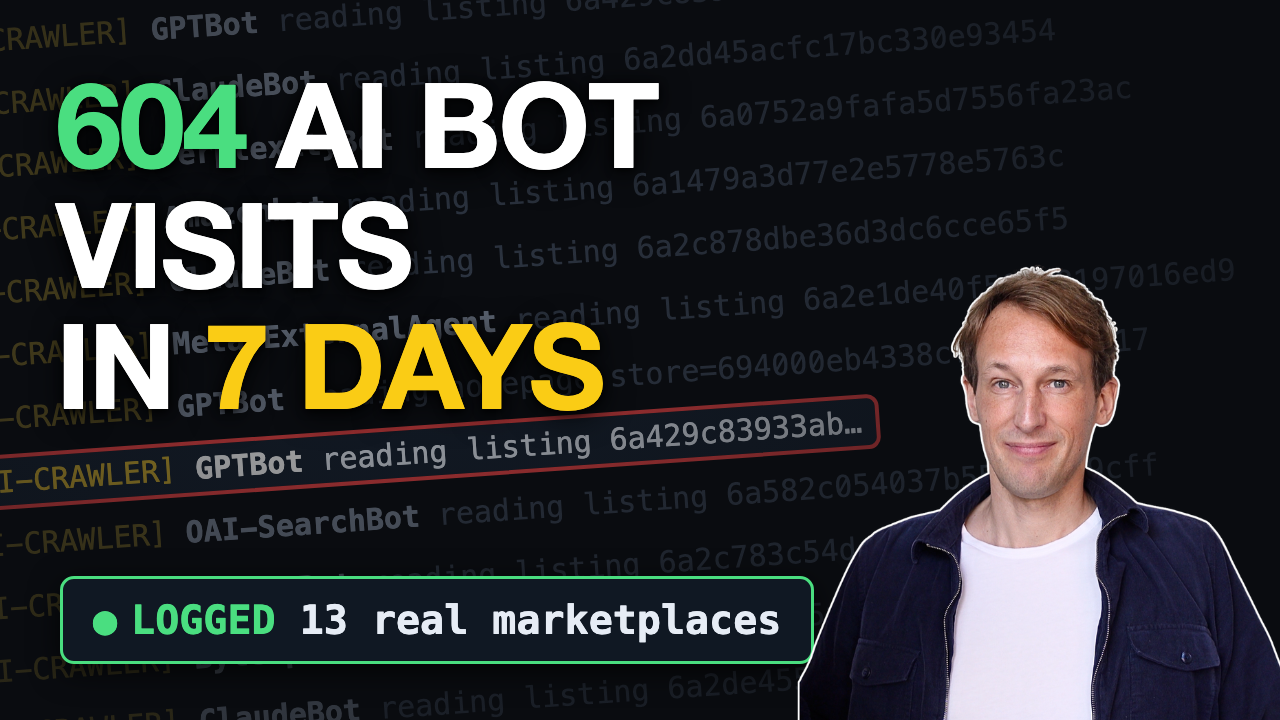
What AI Crawlers Actually Read: 7 Days of Data From 13 Real Marketplaces
604 logged visits · 11 AI bots · 7 days
Tutorial
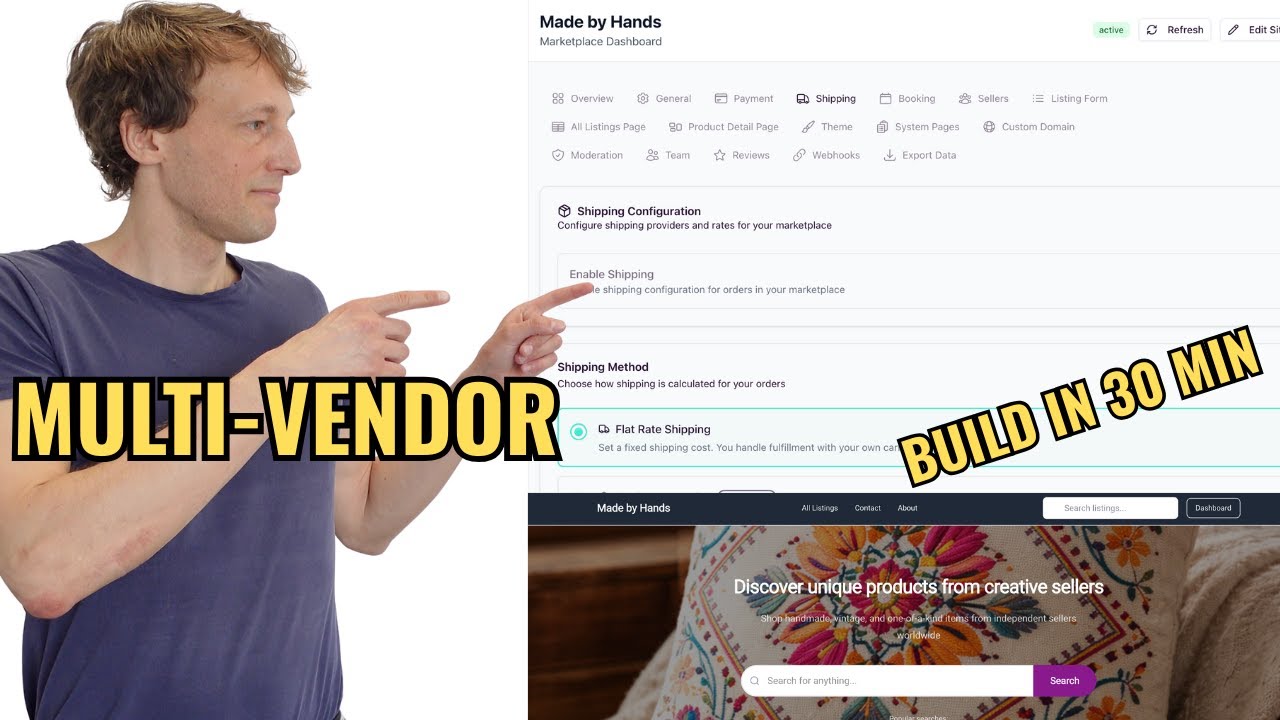
How to Build a Multi-Vendor Marketplace in 2026 (Step by Step)
From idea to first transaction without writing payment code or hiring a dev team
Ready to build your marketplace?
Turn your marketplace idea into reality. No coding required.
Start Free Trial