
B2B Marketplace Builder
The B2B Marketplace Builder
B2B transactions still happen through emails, phone calls, and spreadsheets. That inefficiency is your opportunity.
Build a B2B marketplace that brings business buyers and sellers online - without enterprise development costs.
No coding required. Launch in days, not months.
What Is a B2B Marketplace?
A B2B (business-to-business) marketplace is an online platform where businesses buy from and sell to other businesses, with the platform handling discovery, payments, and procurement workflows.
Examples include Alibaba (global wholesale), Faire (independent retailers buying from indie brands), Knowde (chemicals and ingredients), Joor (fashion wholesale), and Mirakl (enterprise retailer marketplaces).
Unlike B2C marketplaces, B2B platforms typically handle higher order values, longer sales cycles, NET 30/60 payment terms, RFQ (request-for-quote) flows, bulk pricing, and approval workflows.
Quick answer: how to start a B2B marketplace in 2026
Follow these 5 steps:
- Pick a niche industry with real B2B pain - chemicals, construction, food service, fashion wholesale, or any sector where buyers currently use phone, email, or spreadsheets to procure.
- Validate with 10 buyers and 10 sellers before writing code. B2B sales cycles are long; you need both sides to commit before launch.
- Set up your platform with B2B features - seller approval workflows, custom business fields (VAT, business license), NET payment terms, bulk pricing, RFQ flows.
- Connect Stripe Connect for split payments between buyers and your approved sellers. B2B-specific Stripe features (NET 30/60, ACH transfers, invoicing) help close the gap with traditional procurement.
- Recruit your first 10 verified sellers manually. In B2B, quality of supply matters more than quantity - one large verified supplier beats fifty unverified ones.
Each step is covered in more depth below.
Platform comparison
B2B Marketplace Software & Builders Compared
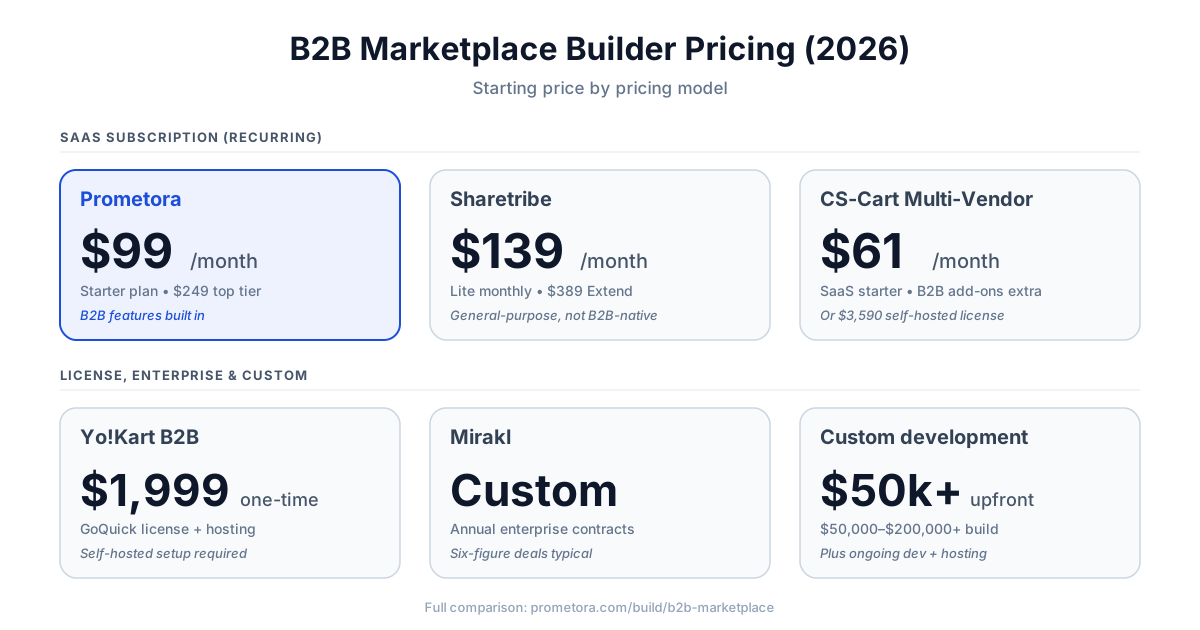
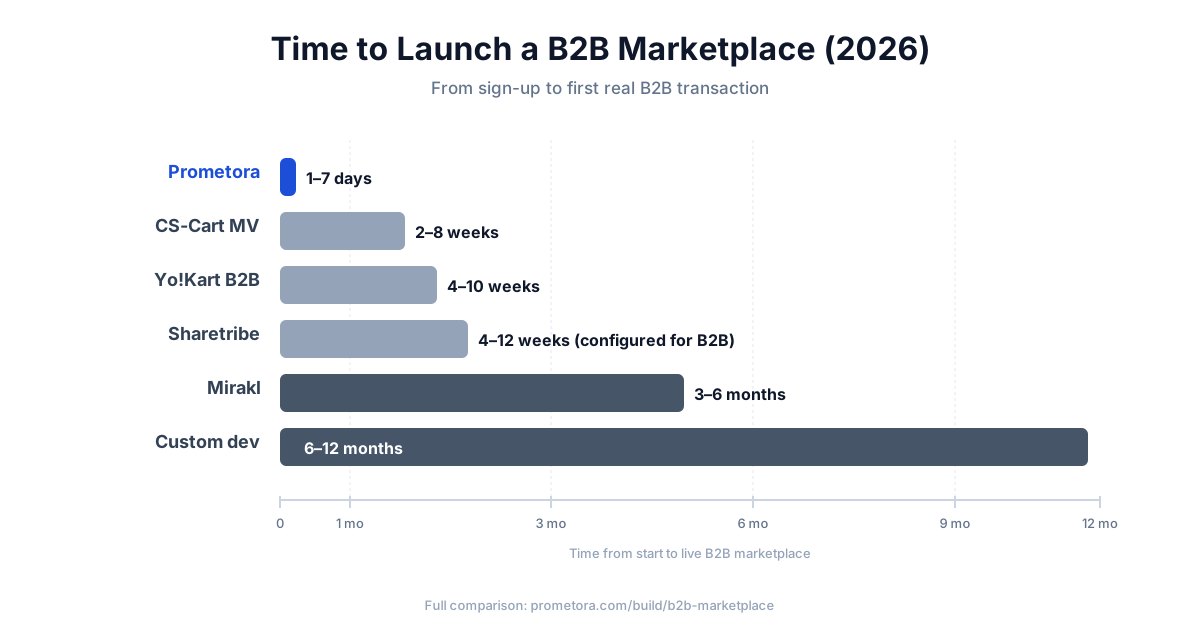
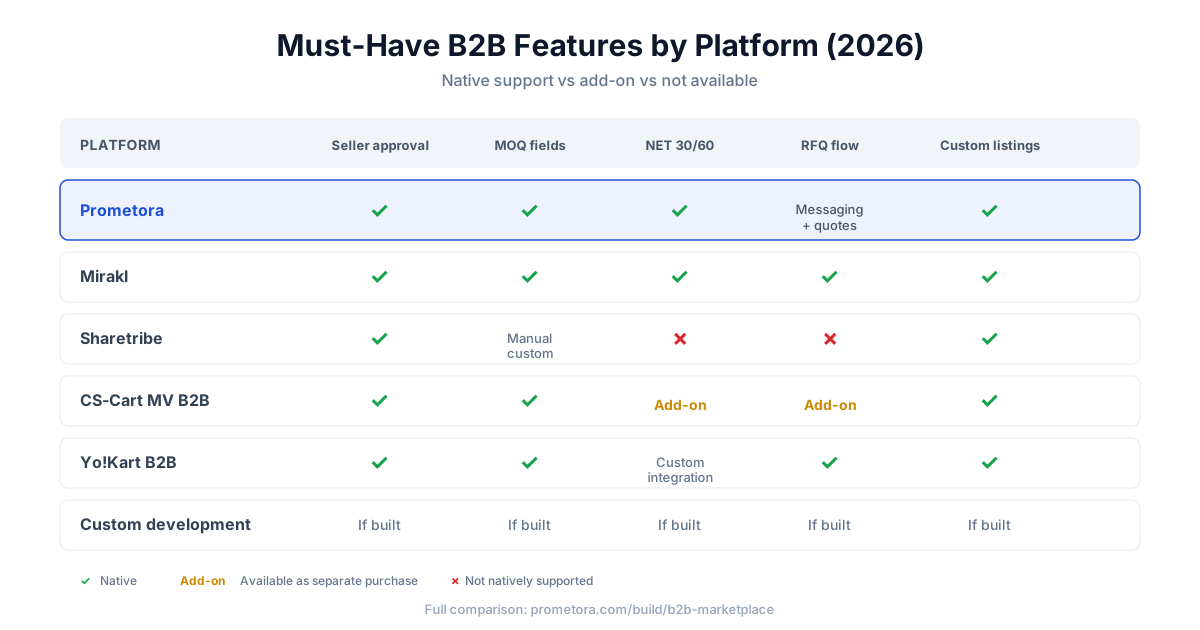
Six honest options across the B2B marketplace software landscape in 2026 - SaaS builders, self-hosted licenses, and enterprise platforms. Pricing, time-to-launch, and feature coverage side by side, so you can pick by fit, not by hype.
Last updated August 16, 2026
| Platform | Starting price | Time to launch | B2B features | Best for |
|---|---|---|---|---|
| Prometora (this page) | $99–$249/mo Recurring SaaS | 1–7 days | Native: seller approval, MOQ, custom listing fields, messaging-based RFQ, NET via custom fields | SMB founders, niche verticals, non-technical operators |
| Mirakl | Custom enterprise Six-figure annual contracts typical | 3–6 months | Enterprise-grade: native NET, RFQ, MOQ, multi-buyer accounts | Enterprise retailers (Best Buy, Macy's, Carrefour scale) |
| Sharetribe | $139–$389/mo Recurring SaaS (monthly billing) | 4–12 weeks | Not B2B-native: no NET, no RFQ, MOQ requires custom fields | General-purpose marketplaces, not built specifically for B2B |
| CS-Cart Multi-Vendor B2B | $61/mo SaaS or $3,590 license B2B add-ons extra | 2–8 weeks | MOQ + seller approval native, NET and RFQ via add-ons | Self-hosted setups with developer support |
| Yo!Kart B2B | $1,999 one-time GoQuick license + your hosting | 4–10 weeks | Native RFQ and MOQ; NET requires custom integration | Owner-license setups with technical comfort |
| Custom development | $50,000–$200,000+ Project-based, plus ongoing dev + hosting | 6–12 months | Whatever you scope and build | Enterprises with workflows no platform supports |
Pricing as of May 2026, US dollars. Mirakl and custom-development figures based on publicly reported enterprise contracts and industry estimates - both vary widely by scope.
Why Founders Move to Prometora
The four most common reasons founders pick a managed SaaS over enterprise platforms, self-hosted licenses, or custom builds.
Coming from Mirakl & Marketplacer
Enterprise pricing before product-market fit
Mirakl and Marketplacer are the right answer at Best Buy or Carrefour scale. For founders pre-launch or pre-PMF, the implementation cost alone usually exceeds two years of expected GMV. Prometora ships the same seller-approval, multi-vendor, and split-payment plumbing at $99–$249/month, so you can validate the marketplace before committing six figures.
Coming from Sharetribe
Not built for B2B workflows
Sharetribe is a great general-purpose marketplace builder, but it doesn't ship native NET 30/60 terms, RFQ flows, or MOQ fields. Those require custom code or off-platform workarounds. Prometora's custom listing fields, seller-approval flow, and messaging-based quotes cover the standard B2B-lite and B2B-plus workflow out of the box.
Coming from Self-hosted (CS-Cart, Yo!Kart)
Hosting, updates, and developer dependency
License platforms feel cheap until you add hosting, security patches, and a developer on retainer. Most founders underestimate ongoing costs by 3–5x. A managed SaaS removes the entire ops layer so you can focus on supplier acquisition - the actual bottleneck in B2B.
Coming from Custom development
6–12 months and $50k–$200k before first sale
Custom development is a category-killer once you're at enterprise scale. Before that, you'll burn 6-12 months and most of your runway building features Prometora already has. Ship on Prometora, validate demand, then migrate later if your workflow genuinely outgrows the platform.
$99/mo to start. 14-day free trial.
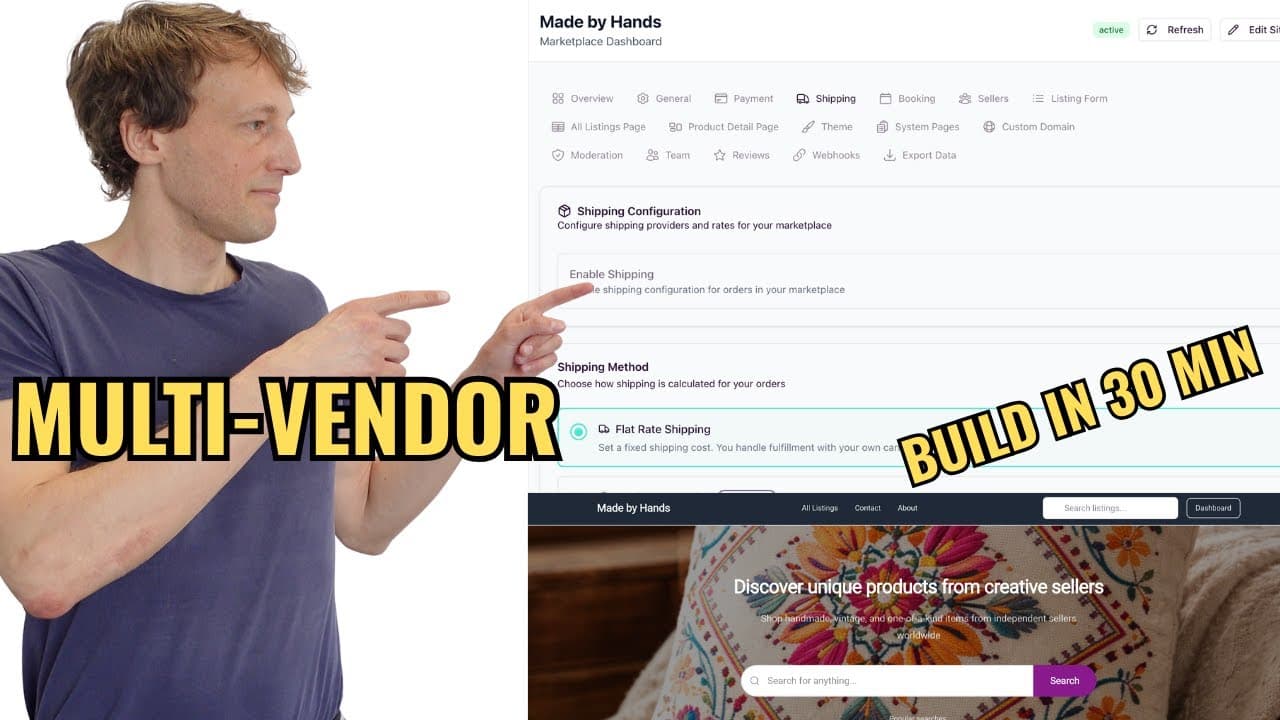
Watch the Full Build
Building a B2B Marketplace with AI
From zero to a live wholesale marketplace - step by step
0:00
Why "sexy" ideas fail
2:06
The B2B spectrum
3:36
Hidden opportunities
5:57
Live build demo
Read the full video transcript▼
Why "sexy" marketplace ideas fail (0:00)
Many marketplace founders are chasing sexy ideas - the next Airbnb, the next Fiverr, the next Etsy. But the sexier the idea, the harder it usually is to win. Right now, the best marketplace opportunities out there might actually be the boring, unsexy B2B ones. In this video I'll show you how a B2B marketplace actually works, where the hidden opportunities are, and how to quickly build one on Prometora.
If an idea sounds exciting at a startup meetup, it's probably already overcrowded. But if it sounds kind of boring to explain at a dinner party, that might actually be a gold mine.
Why B2B is quietly exploding (1:00)
For decades, B2B transactions happened offline - through emails, phone calls, spreadsheets, and personal relationships. What's happening now isn't hype, it's pressure: businesses are being forced to move these workflows online because it's simply too inefficient not to.
The key difference compared to B2C: in B2B, you don't need a million users. You need a small number of high-value, repeat customers. That's why B2B might look boring, but it compounds massively. In B2C, one customer doesn't matter much. In B2B, one customer can be worth hundreds or even thousands of consumer customers.
A lot of founders get B2B wrong because they apply B2C thinking. In B2C, success comes from volume, polish, and viral growth. In B2B, success comes from trust, repeat transactions, and respecting the workflows these businesses actually use.
The B2B spectrum - start simple, then scale (2:06)
Here's a simple framework: start simple, and only add complexity when real demand requires it. You usually start at level one and end up at level three.
- Level 1 - Start simple: simple pricing, card and bank transfer payments, manual onboarding, seller approval flow.
- Level 2 - Scaling: business verification, recurring orders, API integrations, more involved approval flows, tiered or volume pricing.
- Level 3 - Mature: net 30 / net 60 day terms, ERP integrations, purchase orders, custom invoicing, compliance.
Hidden B2B opportunities (3:36)
Here are six B2B niches where money already moves offline. They sound boring at a dinner party - that's usually a good sign.
- Wholesale food & beverage - connect restaurants, cafes, and retailers with wholesale food suppliers and distributors.
- Industrial parts & equipment - spare parts, components, and industrial suppliers for manufacturers, maintenance teams, and contractors.
- Business equipment rentals - e.g. an office supplies marketplace where companies buy and sell used office furniture when moving in or out.
- Trade-specific suppliers - go super niche (plumbing, electrical, HVAC). Tradespeople source equipment somewhere today; a focused marketplace can be a very good business.
Drop other ideas in the comments - always fun to explore.
Live build - Serv Supply (5:57)
Instead of keeping this theoretical, let me build it now. We're building a B2B marketplace called Serv Supply - a wholesale marketplace for restaurant suppliers. Hero, featured listings component, legal page, listing fields like business type and minimum order quantity, seller approval flow, listing approval flow, Stripe Connect (test keys), and a real listing - organic coffee beans wholesale, MOQ 50 kg.
On Prometora I take the "Custom with AI" route, name it Serv Supply, describe it as a marketplace for restaurant suppliers, and pick a professional design. A few seconds later: "Restaurant-grade supplies at wholesale prices." I swap the hero image, clean up the navigation, drop the tagline, remove the quick search chips, and publish.
Featured listings and legal pages (7:30)
I remove the two default components on the front page and add the Featured Listings component instead - it pulls in any listing types you tell it to. Then I add a Terms page and drag in one of the legal page templates.
Listing form, types, and MOQ field (8:30)
In the listing form I create two listing types: Coffee Wholesale and Soap Wholesale. Both one-time purchases. The form already asks for title, description, and price. I add one custom field - Minimum Order Quantity, placeholder "Add your MOQ", set as a number - so a coffee supplier could require orders of 500+, for example.
Approval flows and Stripe Connect (10:00)
Over to Sellers - toggle on both the seller approval flow and the listing approval flow. Every new seller and every new listing now needs approval from the marketplace owner. Then payments: open my Stripe test environment, copy the publishable and secret keys into Stripe Connect on Prometora, save.
Creating the first listing (11:30)
I sign up as a seller (Rasmus 1, magic link). Status: Application pending. As marketplace owner I head to the seller area, find the pending seller, and approve. Refresh - I can create a listing.
Coffee Wholesale listing: "Organic coffee beans wholesale", MOQ 50, price $400, two images, primary picked, publish. Pending again because of listing approval - back to the sellers area, approve. Refresh - published.
Filters and featured listings tweak (13:30)
On the All Listings page I enable type-specific filters (we have two types now), untoggle the default category, add a Minimum Order Quantity filter, keep search on. Then I configure the Featured Listings component to show Coffee Wholesale only - three listings, two columns on mobile.
Test purchase and commission (15:00)
I sign up on a second account as a buyer (Rasmus 2). Buy Now → checkout. Marketplace fee shows $40 - let me adjust commission. In Store Settings → Payments, commission is at 10%. I bump it to 15%, which feels reasonable for B2B. Back to checkout: marketplace fee is now $60 on the $400 sale. The buyer still pays $400; the seller gets $340 and the marketplace earns $60.
I run the test transaction with a Stripe test card. Pay. Order confirmed - everything went through. We haven't set shipping up; that's for another video.
Outro (17:00)
About 15 minutes to a solid B2B marketplace: hero, featured listings, all-listings page with filters, two listing types, seller and listing approvals, payments, and a real test transaction.
B2B doesn't stop here - from here you'd add RFQs, purchase orders, net 30, net 60, and so on. For founders who want help setting everything up, we also offer a white-glove solution. If you have a B2B marketplace idea, just start building. Drop your ideas in the comments - see you in the next one.
The Problem
How Trillions of Dollars Still Change Hands
This is what a typical B2B transaction looks like today. Companies aren't moving online because it's trendy - they're doing it because staying offline is inefficient and expensive.
Email-Driven Ordering
Orders placed via email threads, attachments, and back-and-forth
Slow, error-prone, and impossible to scale
Phone-Based Sales
Buyers call suppliers one-by-one to compare and negotiate
No transparency, no easy comparison
Spreadsheet Catalogs
Product lists shared as Excel files or PDFs
Always outdated, hard to search, no real-time stock
Manual Processes Everywhere
Invoicing, follow-ups, and reorders handled manually
High overhead, limited growth capacity
The Opportunity
One wholesale order can be worth $2,000+. One B2C order averages $30. You don't need millions of users - you need a small number of high-value, repeat customers. You do the math.
Core Framework
The 3 Levels of B2B Marketplaces
B2B marketplaces are not all the same - they range from simple to enterprise. Most founders should start simple and only add complexity when real demand requires it.
B2B-Lite Marketplace
Where most founders should start
- Wholesale platforms
- B2B services marketplace
- Lead-driven marketplace
- Supplier directories with transactions
- Simple pricing
- Card or bank transfer payments
- Manual onboarding
- Seller approval
B2B-Plus Marketplace
Scale when demand requires it
- Company accounts
- Tiered or volume pricing
- Light approval flows
- Custom catalogs per buyer
- Business verification
- Recurring orders
- Account management
- API integrations
Enterprise B2B Marketplace
Prometora as your foundation + custom integrations
- RFQ / RFP workflows
- Purchase orders
- Net-30 / Net-60 terms
- ERP integrations
- Procurement systems
- Complex approval chains
- Custom invoicing
- Compliance requirements
Built on Prometora with custom integrations - talk to us
You can build all three levels with Prometora - self-serve for Level 1–2, custom builds for Level 3
Most successful B2B marketplaces started at Level 1.
Hidden Opportunities
6 B2B Niches Where Money Already Moves Offline
The best B2B marketplace opportunities don't sound exciting at a startup meetup. They sound boring to explain at a dinner party. That's usually a good sign.
Wholesale Food & Beverage
Connect restaurants, cafes, and retailers with wholesale food suppliers and distributors.
Think: a Faire for local restaurant suppliers
Who's already paying for this: Restaurants, cafes, grocery stores
Industrial Parts & Equipment
Spare parts, components, and industrial supplies for manufacturing and maintenance.
Think: an Amazon Business for machine parts
Who's already paying for this: Manufacturers, maintenance teams, contractors
Professional B2B Services
Accounting, compliance, marketing, and operations services - verticalized for a specific industry.
Think: an Upwork for accounting firms
Who's already paying for this: SMBs needing specialized business services
Business Equipment Rentals
Construction equipment, event infrastructure, office furniture, and commercial vehicles.
Think: a Fat Llama for construction equipment
Who's already paying for this: Contractors, event planners, growing businesses
Trade-Specific Suppliers
Niche materials and supplies for specific trades - plumbing, electrical, HVAC, or beauty.
Think: a niche Alibaba for plumbing supplies
Who's already paying for this: Tradespeople, salon owners, specialized buyers
Private Buying Groups
Closed marketplaces for franchises, associations, or cooperatives to source from approved vendors.
Think: a Costco-style marketplace for franchise networks
Who's already paying for this: Franchise networks, co-ops, industry associations
Pick one niche. Find 10 sellers. That's your starting point.
B2B Revenue Model
Calculate Your Marketplace Revenue
In B2B, you don't need millions of transactions. Higher order values mean even a small commission adds up fast.
Net Monthly Revenue
$276
After Prometora & Stripe fees
Annual Projection
$3,312
Net revenue at this volume × 12
Above Break-Even
36 orders
64 above — subscription covered
Your Settings
Per Transaction Breakdown
Billed to you once a month with your subscription
Deducted from seller · US card rate
Per sale, before your monthly subscription
Monthly Projections
Yearly Projections
Like the look of $276/month?
Start a free 14-day trial and turn this projection into a real marketplace.
Revenue Growth Chart
Visualize how your net revenue scales with order volume
Monthly orders → Net revenue/month
Scaling Projections
See how your revenue grows as your marketplace scales (based on $50 AOV, 10% commission, Professional plan)
| Orders | GMV | Commission | Fees | Net |
|---|---|---|---|---|
| 50 | $2,500 | $250 | -$187 | $64 |
| 100Current | $5,000 | $500 | -$224 | $276 |
| 250 | $12,500 | $1,250 | -$337 | $914 |
| 500 | $25,000 | $2,500 | -$524 | $1,976 |
| 1,000 | $50,000 | $5,000 | -$899 | $4,101 |
Ready to Start Earning?
With 100 orders at $50 AOV, you could be earning $276/month. Start building your marketplace today.
Why B2B Math Works
B2C marketplace (typical):
- $30 average order
- 10% commission = $3 per transaction
- Need thousands of orders/month
- High marketing cost per user
B2B marketplace:
- $500–$5,000+ average order
- 5% commission = $25–$250 per transaction
- Dozens of orders can sustain the platform
- Repeat buyers = compounding revenue
Step-by-step playbook
How to Build a B2B Marketplace in 2026
Six concrete steps from idea to live B2B marketplace. B2B has different mechanics from B2C - longer sales cycles, larger orders, procurement workflows. Each step below is tailored to that.
- 1
Pick a vertical industry, not a category
Generic "B2B marketplace" doesn't work. The B2B platforms that win pick a specific industry and go deep: Faire (independent retailers), Knowde (chemicals), Joor (fashion wholesale), Tundra (consumer brands). Pick a vertical where buyers and sellers have specific needs (compliance docs, sample requests, RFQs, NET terms) that horizontal marketplaces can't replicate.
- 2
Configure listings for B2B (MOQ, lead time, bulk pricing)
B2B listings need different fields than B2C. Add minimum order quantities (MOQ), lead times, bulk-pricing tiers (1-10 units at $X, 11-50 at $Y, 51+ at $Z), product specifications, and compliance documents. Buyers in B2B filter by these specs - not by color and size. With Prometora's custom listing fields, you configure this per marketplace.
- 3
Set NET payment terms and verify both sides
B2B doesn't run on credit cards alone. Buyers expect NET 30 or NET 60 payment terms - meaning they pay 30 or 60 days after delivery. Faire built their entire wedge on this. You'll need to either offer NET terms yourself (with credit risk) or partner with a financing service. Stripe Connect handles the payment splits; financing terms are a layer on top.
- 4
Configure RFQ (request-for-quote) flow
For larger or custom orders, B2B buyers expect to negotiate. Build an RFQ flow where buyers submit specs ("I need 5,000 units of X with delivery by Y") and sellers respond with quotes. This is messaging-first, not buy-now. Prometora's messaging system handles this naturally - sellers and buyers can negotiate, share files, and finalize before a purchase happens.
- 5
Recruit suppliers AND buyers separately
B2C marketplaces solve the cold start by stacking supply first. B2B is harder - both sides need higher trust, longer sales cycles, and verification. Recruit your first 5-10 suppliers personally. Then recruit buyers who specifically want what those suppliers offer. The first matches need to be hand-curated, not algorithmic.
- 6
Drive your first 10 transactions (with high-touch onboarding)
B2B transactions are bigger and slower than B2C. Don't expect viral growth - expect 3-6 month sales cycles for the first cohort. Treat every early buyer like a strategic account. Hop on calls, walk them through the platform, fix bugs they find. The first 10 deals are gold - they generate the case studies and references that close the next 100.
Built-In Features
Everything You Need for a B2B Marketplace
Prometora includes the features B2B buyers and sellers need - out of the box, no custom development.
Approve Sellers Before They List
Review every supplier application with custom fields - VAT ID, business type, certifications, document uploads. Reject with messaging built in.
Learn moreMOQ + Bulk Pricing Tiers
Set minimum order quantities, lead times, and tiered bulk pricing per listing. Buyers filter and compare on the specs B2B procurement actually cares about.
Learn moreNET 30/60 Payment Terms
Configure NET payment terms via custom fields and buyer-seller messaging. Stripe Connect handles the splits the moment payment lands.
Learn moreRFQ + Quote Messaging
Bigger orders get negotiated, not bought outright. Buyers send specs, sellers respond with quotes, both sides finalize before purchase.
Learn moreStripe Connect Split Payments
Automatic payment splitting between you and your approved sellers. Commission collected per transaction, payouts run on your schedule.
Learn morePer-Vertical Custom Listings
Bulk-pricing tiers, compliance docs, sample-request toggles, certifications - configure your listing form for the specific B2B vertical you serve.
Learn moreReal-world examples
Niche B2B Marketplaces Worth Studying
These aren't platforms you build *on* - they're marketplaces you should *study* before building your own. Each one picked a focused vertical and built B2B-specific workflows (RFQs, NET terms, sample requests, compliance) that horizontal marketplaces can't replicate.
Wholesale for independent retailers
B2B niche - independent retailers buying from indie brands. NET 60 payment terms and free returns gave brick-and-mortar shops a way to compete with Amazon. $12B valuation.
Global wholesale and trade
The largest B2B marketplace on Earth, processing over $1 trillion in GMV across its platforms. Made global wholesale accessible to small importers - SKUs, MOQs, and supplier verification all built in.
Chemicals and ingredients
Vertical-specific B2B for chemicals, ingredients, and polymers. Solved the spec-sheet and sample-request workflow that Alibaba can't replicate at chemical-industry scale. Backed by Sequoia and Coatue.
Wholesale for fashion brands
B2B platform for fashion - brands selling to retailers. Built for the seasonal order cycle, line sheets, and trade-show workflow that fashion wholesale runs on. Standard for over 13,000 retailers.
Enterprise marketplace platform
Enterprise-grade marketplace SaaS used by major retailers (Best Buy, Macy's, Carrefour) to add multi-vendor channels. Closest peer to Marketplacer at the very top of the market - not for SMB.
European B2B wholesale for indie brands
European competitor to Faire focused on independent retailers buying from indie brands. Free shipping over a threshold and NET 60 payment terms gave brick-and-mortar shops in France, Germany, and the UK a way to compete with Amazon. Backed by Tiger Global and Bain Capital.
The pattern: pick one industry vertical and build the procurement workflows that vertical actually needs.
How It Works
Launch Your B2B Marketplace in 3 Steps
Pick Your B2B Niche
Focus on one buyer type, one seller type, and one core workflow. Wholesale food, industrial parts, professional services - the more specific, the easier to win.
Build with AI
Describe your B2B marketplace to Prometora's AI. It generates your pages, categories, listing fields, and content. Add B2B-specific fields like MOQ, lead times, and business type. No code required.
Onboard Suppliers
Invite suppliers to apply. Review and approve each one. They create their storefronts, list products, and start selling. You earn commission on every transaction.
Build It Yourself
Start Free Trial
Perfect for founders who want to move fast. Build, test, and iterate your B2B marketplace on your own terms.
View All PlansDone For You
White Glove Setup
Already running a business? We'll build and configure your B2B marketplace for you - custom domain, design, payment setup, and launch strategy.
Learn MoreStripe Connect
Secure payments
SSL Encrypted
All data protected
14-Day Free Trial
Test everything first
Custom Domain
Your brand, your URL
Related guides
Keep going
More videos and guides on building marketplaces from scratch.

Trusted by Marketplace Founders
“Highly Customizable, Exceptional Support”
“I find Prometora incredibly intuitive and easy to structure, much like Lego blocks… I've tried many alternatives, but Prometora was the only one that didn't limit my vision. Additionally, the support from Rasmus and the Prometora Team is exceptional.”
Antoanella P.
Founder
“Comprehensive, Ever-Improving System with Excellent Support”
“It is a comprehensive system that is constantly being improved and new functionalities are added. And if you are missing a function, you can contact Prometora and ask them to develop it - and they are very responsive… Prometora takes care of everything a web developer would have done in our company, so we can do without that part.”
Torben M.
CEO
“User-Friendly Marketplace Builder with Super Helpful Support”
“It's an excellent, user-friendly tool for any beginner who wants to kickstart a marketplace website quickly and start testing an idea without worrying about the technical side of things… Prometora makes it possible for a complete beginner to launch a working, fully functional marketplace within a couple of weeks.”
Verified User
Non-Profit Organization Management
Reviews collected by and hosted on G2.com
Frequently Asked Questions
1. Pick a niche industry with real B2B pain - chemicals, construction, food service, fashion wholesale, or any sector where buyers currently use phone, email, or spreadsheets.
2. Validate with 10 buyers and 10 sellers before writing code - B2B sales cycles are long, so you need both sides committed before launch.
3. Set up B2B-specific features - seller approval, custom business fields (VAT, tax ID, MOQ), NET payment terms, RFQ flows.
4. Connect Stripe Connect for split payments. B2B-specific Stripe features (ACH transfers, invoicing, NET 30/60) help close the gap with traditional procurement.
5. Recruit 10 verified sellers manually - in B2B, one large verified supplier beats fifty unverified ones.
For the full step-by-step playbook with examples, read how to start an online marketplace.
• No-code (Prometora): $99-$249/month subscription. Live in days to weeks. Best for non-technical founders validating an idea.
• White Glove Setup (Prometora): $3,999 one-time, done-for-you build. Expert setup without enterprise pricing.
• Custom development: $50,000 to $200,000+ and 6-12 months. Only makes sense if you need workflows no platform supports (heavy enterprise procurement, deep ERP integrations).
The right path depends on your stage. Pre-validation? No-code. Validated and scaling? Custom may eventually pay off - but most B2B marketplaces never need to migrate. See the full marketplace software comparison.
The reason: B2B niche industries have specific workflows (certifications, lead times, MOQ, regulatory requirements) that horizontal platforms can't match. Prometora supports custom listing fields, seller approval workflows, and custom branding so you can configure the marketplace exactly to your niche - whether that's a Faire for industrial parts or a Knowde for specialty ingredients.
For B2B, this handles card and bank transfer payments. If your market requires invoicing or net-30/60 terms, those fall into enterprise territory. Learn more in our revenue guide.
We also offer a White Glove Setup ($3,999 one-time) where we build and configure your B2B marketplace for you - ideal if you want expert setup without the enterprise price tag.
We offer enterprise solutions for larger operations - reach out and we'll find the right fit.
Most wholesale platforms are B2B, but not all B2B marketplaces are wholesale. If your buyers are businesses but they're buying services or rentals rather than goods, you're B2B but not strictly wholesale.
• No-code SaaS ($99-$249/mo, 1-7 days to launch, B2B features native) - best for SMB founders and niche verticals.
• General-purpose SaaS ($139-$389/mo) - works if B2B isn't the core use case, but you'll bolt on NET terms and RFQ.
• Self-hosted licenses ($61/mo or $1,999-$3,590 one-time) - for technical teams with developer support.
• Enterprise platforms (custom, six-figure annual contracts) - for Best Buy or Carrefour-scale retailers.
• Custom development ($50k-$200k+) - only for unique workflows no platform supports.
Startups should almost always start with no-code SaaS and migrate later if needed. See the full comparison table above.
• Marketplace-native SaaS - Prometora (from $99/mo, with B2B features like MOQ, NET payment terms, and seller approval built in) or Sharetribe ($139+/mo, B2B via workarounds).
• Self-hosted software - CS-Cart B2B ($61/mo SaaS or $3,590 license) and Yo!Kart B2B ($1,999 one-time) - full code ownership, developer required.
• Enterprise software - Mirakl and similar, custom-priced contracts for retailer-scale operations.
Pick by stage: founders validating a niche want SaaS speed; enterprises with procurement teams want Mirakl-class platforms. The comparison above covers all six options side by side - or see the broader marketplace software comparison.
For lightweight integrations, use Zapier or Make. For deep enterprise integrations, Stripe Connect handles the payment side and our webhooks fire on every order, refund, and seller event - so you can pipe data into any downstream system. See the webhooks documentation for the full event list.
For more advanced cases (negotiated pricing per buyer, contract pricing), use the built-in messaging system for buyers to request quotes and sellers to respond with custom prices. This handles the RFQ workflow most B2B buyers expect on larger orders.
The bottleneck is rarely the technology - it's recruiting your first 10 verified suppliers, which takes weeks regardless of platform. Pick the path that lets you start that conversation soonest. See the time-to-launch comparison above for the full breakdown.
Common pattern: a wholesale marketplace where suppliers also sell direct-to-consumer at retail prices, with different pricing tiers and payment terms per buyer segment. Configure listing types, payment methods, and approval workflows independently per segment.

Have questions? Let's chat
Book a free call with me to discuss your marketplace idea, get a demo, or ask any questions about Prometora.
Free 15-minute call · No commitment

Ready to Build Your B2B Marketplace?
The biggest mistake founders make in B2B marketplaces isn't choosing the wrong tech. It's starting too heavy, too early.
Start Free Trial14-day free trial. No charge until your trial ends.